ingredient
Kashk in a US kitchen: what to buy and what a substitute changes
Recognize Persian kashk, distinguish a jarred sauce from dried forms, and understand the limits of yogurt or sour cream as a substitute.
AI editorial review: 2026-10-20
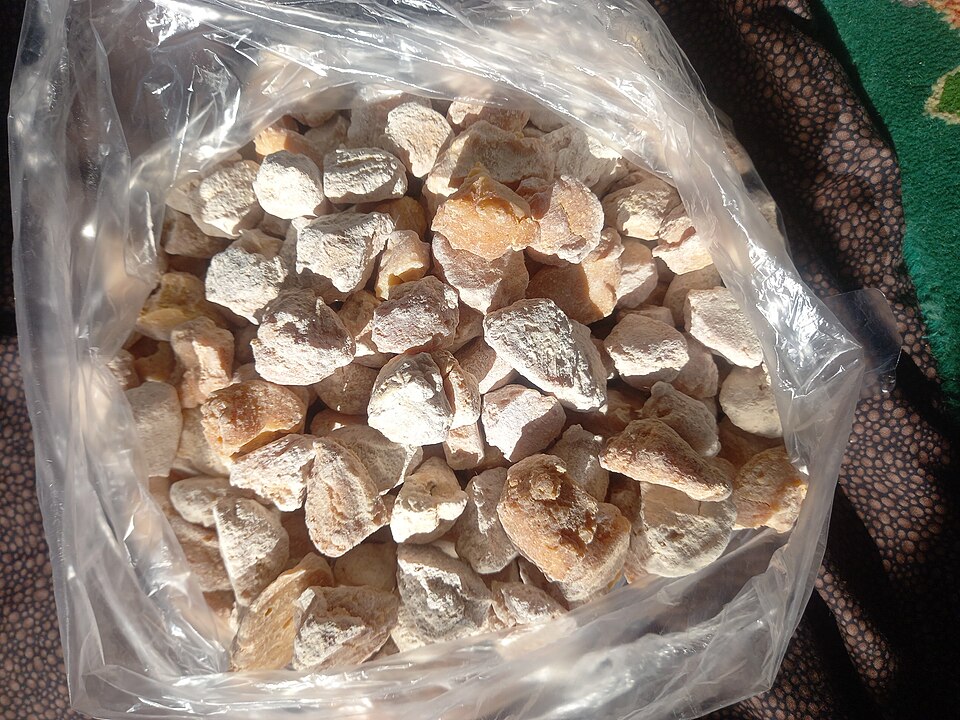
Photo: Shams948 — Kashk 01.jpg · CC0 1.0 · Wikimedia 960-pixel rendition; no further crop or edit.
Start with the product, not just the English translation
Kashk (کشک) is a tangy dairy ingredient used in Persian cooking. An English label may describe it as Persian whey or a yogurt-based sauce. Those descriptions do not tell you whether you are buying a ready-to-use liquid or a dried product that needs preparation. Check the actual form before following a recipe.
For one concrete US retail example, Sadaf lists Kambiz Pasteurized Kashk as a yogurt-based sauce containing milk ingredients, water, starch and salt. That is information about that product, not a definition of every traditional kashk. Read the package you receive rather than assuming two brands have identical ingredients.
Match it to the dish you are making
Persian-language recipes use kashk in dishes such as kashk-e bademjan, the eggplant dish, and ash reshteh, a herb-and-noodle soup. IranCook presents more than one regional preparation of kashk-e bademjan. A different proportion or texture is not automatically a mistake: identify the version your recipe intends before changing it.
When shopping, keep three questions together: Is this liquid or dried kashk? Does the recipe specify that same form? What preparation and storage directions does this particular package give? This is more useful than choosing the first jar with the word whey on it.
Can plain yogurt or sour cream stand in?
Food writer Naz Deravian describes her family's use of yogurt or sour cream when replacing kashk for Canadian and American guests. This is a documented adaptation, not proof that the ingredients are identical. It can be a practical choice when you accept a different result.
We have not tested a universal replacement ratio. Use a recipe written for the substitute when possible, especially when the dairy ingredient is central to the dish. Do not label the adapted result as an unchanged traditional preparation.
Sources: [1]
Before you use the jar
The cited Kambiz product contains milk ingredients. Check your own package for allergens, preparation directions and storage instructions; a website description is not a substitute for the label. This guide does not provide instructions for homemade fermentation or long-term preservation.
The useful shopping terms are kashk, Persian kashk and pasteurized kashk. A product listing is an example of terminology, not a guarantee of stock near you. The source links below are research references, not paid recommendations.
Sources: [2]
Research sources
- Naz Deravian — Homemade Kashk (checked 2026-10-20)
- Sadaf — Kambiz Pasteurized Kashk product ingredients (checked 2026-10-20)
- IranCook — Kashk-e bademjan (Persian source) (checked 2026-10-20)
- IranCook — Ash reshteh (Persian source) (checked 2026-10-20)